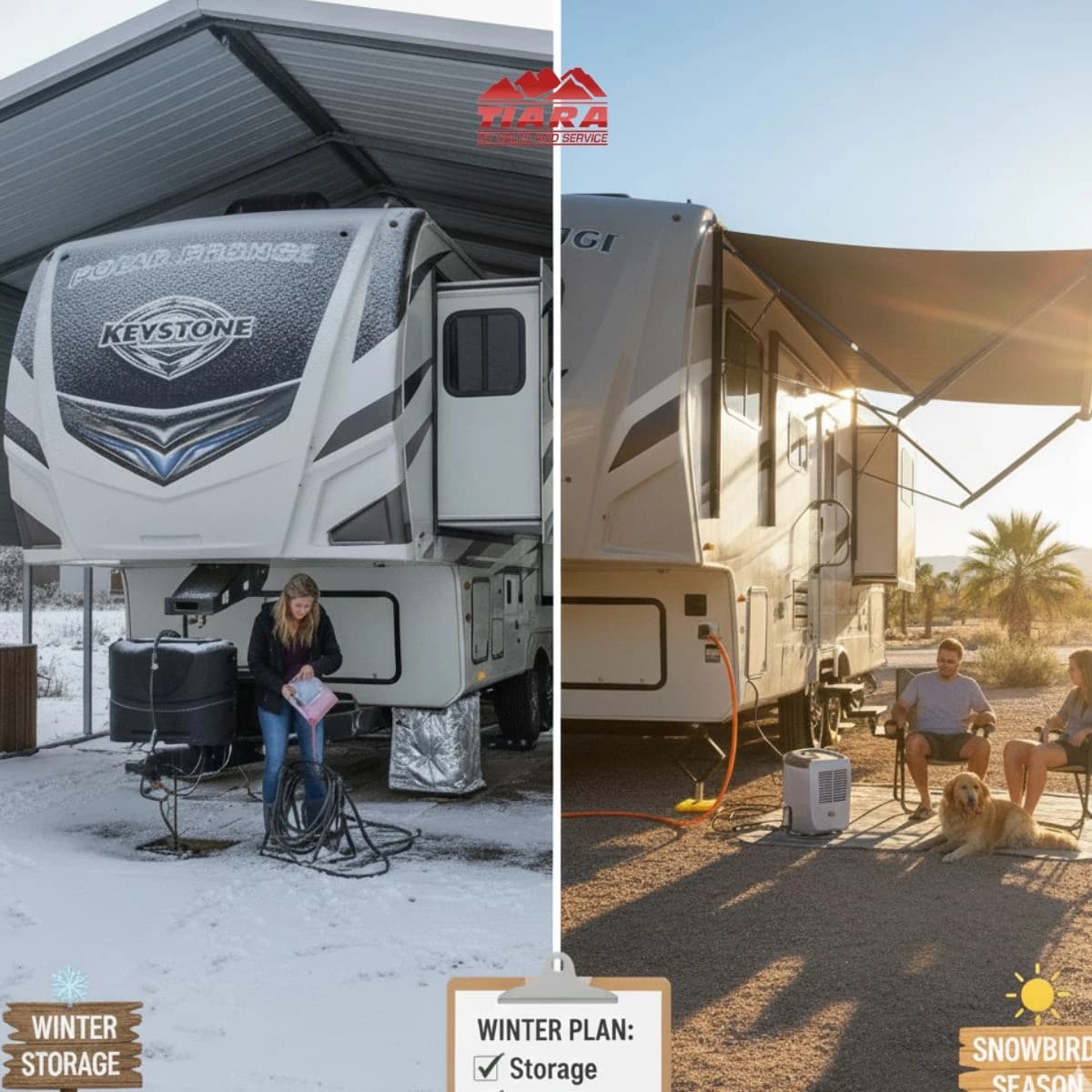
As the colder season approaches, every RV owner faces the same decision: whether to winterize and store their rig or pack up and head south. The choice is about more than just dodging snow; it impacts your budget, maintenance schedule, and overall lifestyle.
As an experienced provider of RV service in Elkhart, the RV Capital of the World, Tiara RV is here to weigh the pros and cons of each path. We’ll offer maintenance tips for both storage and long-distance travel, ensuring you have the expert knowledge to protect your investment this winter.
Weighing Your Winter RV Options
The decision to store or snowbird comes down to three main factors: cost, maintenance risk, and lifestyle.
A. Winter RV Storage (The Hibernation Option)
Storage is the traditional choice for those living in four-season climates. It minimizes travel costs but requires meticulous preparation to prevent damage.
Pros | Cons |
Lower Cost (Initial): Eliminates travel fuel and southern lot fees. | High Damage Risk: Plumbing, tanks, and batteries are vulnerable to freezing. |
Security: Indoor or covered storage offers protection from weather and theft. | Intensive Maintenance: Requires full winterization (draining, antifreeze, pest-proofing). |
Convenience: Keeps your RV close for early spring use. | Lost Opportunity: No access to your RV for several months. |
B. Snowbirding (The Southern Migration)
Heading south transforms your winter into an extended vacation, but it swaps one set of maintenance concerns for another.
Pros | Cons |
Enjoyment & Health: Escape cold weather, engage in outdoor activities, and meet new people. | High Expense: Significant costs for fuel, maintenance checks, and monthly campground fees. |
Utility: Your RV remains fully functional and ready to use daily. | Increased Wear: Puts more mileage and hours on the engine, drivetrain, and appliances. |
Lifestyle: A total change of scenery and routine can enhance quality of life. | Maintenance Shift: Focus shifts from freeze protection to AC/Tire/Roof care. |
Essential RV Care for Each Winter Path
Whether you choose to store your RV or take it on the road, the quality of your pre-season care is paramount.
A. RV Care Tips for Cold Storage
Preventing water damage and managing moisture are the two most critical steps for storage. A simple blow-out or a splash of antifreeze isn't enough to secure your valuable investment.
Water System Lockdown: You must fully drain and winterize your plumbing system using non-toxic RV antifreeze. Don't forget often-overlooked components like the toilet's flush valve, outdoor shower, and ice maker line.
Tire Protection: Inflate your tires to the maximum cold PSI listed on the sidewall, not the sticker, to reduce sidewall flex. Cover tires with UV-resistant covers to prevent dry rot and degradation during months of sun exposure.
Battery Management: Remove the batteries and store them in a cool, dry place above freezing. Use a trickle charger or battery maintainer to keep the charge topped off.
Pest and Moisture Control: Clean all food completely. Place moisture absorbers (like DampRid) inside, and use screens on all vents and openings to deter rodents.
B. RV Care Tips for Snowbird Season
For snowbirding, the focus shifts to ensuring reliability on the road and managing warm-weather systems.
Drivetrain and Braking Service: Before a long drive, schedule a complete service, including brake inspection, wheel bearing repacks (for towables), and engine fluid checks. An unexpected breakdown hundreds of miles from home is a massive inconvenience and expense.
A/C System Check: Your heating system is on vacation, but your Air Conditioning unit is about to work overtime. Have your A/C unit inspected and filters cleaned before you leave, as warm climates will stress the system daily.
Tire Pressure While Driving: Heat dramatically affects tire pressure. Check your cold PSI religiously before driving each day and be aware that long stretches of highway will increase pressure as the tire heats up.
Roof Protection (The Sun Factor): Southern sun and heat are harsh on roof membranes and sealants. Inspect your roof seals thoroughly before leaving and pack extra sealant in your Parts Department inventory (https://www.tiararvsales.com/parts/) for quick repairs.
Equipping Your RV for the Transition
Every season change presents an opportunity to upgrade or equip your RV for its new role. We offer both new and discount RVs as well as all the necessary parts for a smooth transition.
Must-Have Accessories for Snowbirders
Heated Hoses: Even in the south, a sudden cold snap can freeze an unheated water hose connected to a spigot.
RV Skirting: If you plan to be stationary for several months, skirting your RV dramatically improves energy efficiency, especially if you need to run your heat pump.
Dehumidifiers: Warm, humid climates can create mold and mildew inside. A small electric dehumidifier is a vital tool for long-term comfort.
New & Discount RVs for a Seasonal Upgrade
Perhaps your current RV is too small for a long snowbird season or too old to risk a cold storage winter. Fall is a fantastic time to consider an upgrade, as we offer great deals on both new and used inventory.
Whether you're looking for a gently used travel trailer or fifth wheel, check our selection of discount RVs ready for the road. Trading up now can minimize winterizing hassle and put you in a newer, more comfortable unit for the spring.
Expert Service Right Here in Elkhart
If you are choosing storage, the single best way to protect your RV is to leave the winterization to the professionals. Our certified technicians have the tools and expertise to ensure every drop of water is removed and your systems are protected, avoiding damage that insurance won't cover. Schedule your professional RV service Elkhart appointment with our team today.
Get Ready for Winter with Tiara RV
The time to choose your winter path is now. Don't wait until the first freeze to realize your pipes aren't drained, or the summer heat to find your A/C is struggling.
Whether you’re snowbirding or storing, Tiara RV can help you prep the right way.