
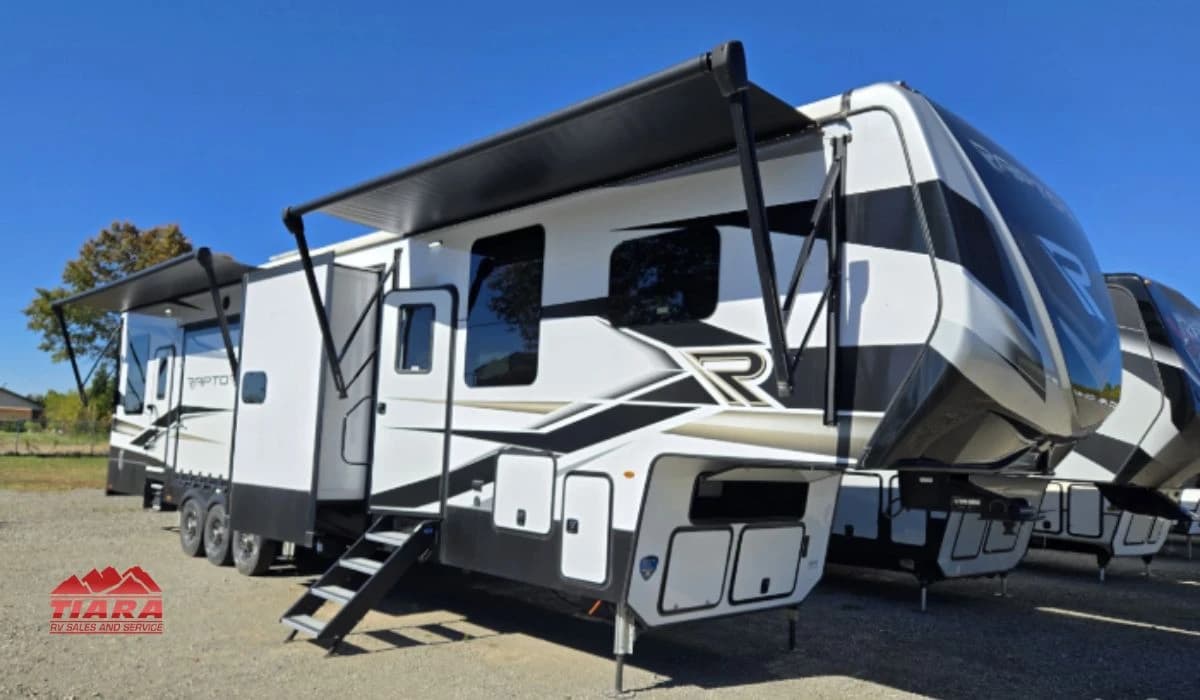
There is a version of towing a travel trailer or fifth wheel that feels completely natural, and there is a version that has you white-knuckling the steering wheel every time a semi passes you at highway speed. The difference between those two experiences is almost never the truck and almost always the setup. Proper hitch selection, correct weight distribution, and understanding how your specific rig behaves on the road are the factors that determine whether towing feels controlled or terrifying. Whether you are shopping for RV parts in Elkhart to upgrade your existing setup or buying your first towable, this guide covers what you need to know before you hook up and head out.
Getting the Hitch Right: The Foundation of Safe Towing
No other single decision affects towing safety more than the hitch configuration. The right hitch for your combination of tow vehicle and trailer does more than connect the two. It manages weight transfer, controls sway, and keeps the entire rig stable under braking and in crosswinds. Getting it wrong is not just uncomfortable. It is dangerous.
Weight-Distribution Hitch vs. Standard Ball Hitch
A standard ball hitch is a single point of connection between the truck and the trailer. For lighter trailers, it works adequately. But as trailer weight increases, a standard ball mount allows the tongue weight of the trailer to press down on the rear of the tow vehicle, lifting the front axle and reducing steering control and braking effectiveness. This is the condition that produces trailer sway and the "wagging tail" effect that catches new towers completely off guard.
A weight-distribution hitch addresses this directly. It uses spring bars that transfer a portion of the tongue weight forward to the front axle of the tow vehicle, restoring level ride height across both the truck and the trailer. The result is a rig that steers predictably, brakes evenly, and sits level rather than nose-high on the truck and tail-low on the trailer.
As a general industry guideline, a weight-distribution hitch is recommended for any trailer with a gross weight over 5,000 pounds or a tongue weight over 500 pounds. For most travel trailers in the mid-size and larger range, that threshold is crossed well before the unit is loaded. If you are unsure whether your current setup requires one, that is a question worth answering before your next trip, not after a sway event on the interstate.
Most weight-distribution heads also integrate sway control, either through friction-based mechanisms or through active four-point sway control systems that engage independently of the head unit. Active sway control is worth the upgrade for anyone towing in crosswind-prone areas or on highways with heavy truck traffic.
Fifth Wheel Hitches: Slider vs. Fixed for Short-Bed Trucks
Fifth wheel towing introduces a different set of hitch considerations because the connection point moves from the bumper area to the bed of the truck. The fifth wheel hitch mounts in the truck bed over the rear axle, and the trailer's kingpin locks into it. This configuration is inherently more stable than a ball hitch because the connection point is centered over the truck's rear axle rather than behind it.
The critical variable for short-bed truck owners is the clearance between the front of the trailer and the back of the truck cab during turns. Standard short-bed trucks, typically those with beds under six and a half feet, do not have enough clearance for a fixed fifth wheel hitch with most trailer configurations. A tight turn can result in the trailer nosing into the cab, which causes damage and, in severe cases, a loss of control.
A slider hitch solves this by allowing the hitch head to slide rearward during turns, creating the clearance needed for the trailer nose to clear the cab. When the truck straightens out, the hitch returns to its forward locked position for normal towing. The trade-off is a slightly more complex setup and a higher hitch weight rating requirement to account for the dynamic loads during the slide cycle.
The rule of thumb used by most RV professionals: if your truck bed is under six and a half feet and you are towing a standard residential-style fifth wheel, assume you need a slider hitch and confirm by measuring the specific trailer's front cap overhang against your cab clearance. Some shorter toy hauler-style fifth wheels with a more squared front cap have less overhang and may clear on a fixed hitch, but measuring is not optional.
Trailer Brake Controllers: The Component That Gets Skipped
Hitch setup gets most of the attention in towing conversations, but brake controller setup is equally important and more frequently neglected. Any trailer over a certain weight threshold is required by law to have functioning electric brakes, and those brakes must be calibrated to work proportionally with the tow vehicle's braking input.
A brake controller that is set too aggressive will cause the trailer brakes to lock before the truck brakes engage, creating a push-pull effect that destabilizes the rig. A controller set too passive allows the trailer to push the truck under braking, which increases stopping distances and can induce sway on a downhill grade.
Calibrating a brake controller is not complicated, but it requires a deliberate test in a safe environment. Most controllers include a gain adjustment and a manual override. Set the gain conservatively, then perform a controlled brake application at low speed on an empty road. Increase the gain in small increments until the trailer brakes contribute meaningfully without locking. This process takes fifteen minutes and is one of the most important pre-trip checks you can complete.
Why Proper Setup Is the Number One Factor in Confident Towing
New towers often assume that towing anxiety comes from inexperience and will resolve on its own with mileage. Sometimes that is true. But in a significant number of cases, the anxiety is the truck telling you something is wrong with the setup. An improperly loaded trailer, an under-rated hitch, or a miscalibrated brake controller will produce handling characteristics that do not improve with practice because the physics are working against you regardless of driver skill.
The owners who describe towing as natural and low-stress are almost universally the ones who took the time to get the setup right before accumulating mileage. Proper tongue weight loading, a correctly rated and configured hitch, and a calibrated brake controller transform the experience from something that demands constant vigilance into something that becomes routine.
If you need hitch components, brake controllers, or weight-distribution hardware, our RV parts department at Tiara RV stocks towing equipment suited to both travel trailers and fifth wheels. If you want a professional eye on your current setup or need a hitch installed correctly, our RV service team handles installations and pre-trip inspections regularly.
If you are still in the shopping phase, browse our used Keystone fifth wheel inventory or the full selection of used fifth wheels currently in stock to find a unit that fits your tow vehicle's capacity.
Frequently Asked Questions
Do I need a weight-distribution hitch for my travel trailer?
If your loaded trailer weighs more than 5,000 pounds or has a tongue weight over 500 pounds, a weight-distribution hitch is strongly recommended and in many cases required by the tow vehicle manufacturer to maintain the vehicle's rated tow capacity. Check your truck's owner's manual for the specific threshold. Towing a heavy trailer on a standard ball mount without weight distribution reduces steering control and increases stopping distances.
What causes trailer sway and how do I prevent it?
Trailer sway is most commonly caused by one or more of the following: improper tongue weight loading (tongue weight should be 10 to 15 percent of total trailer weight), an improperly configured hitch, a tow vehicle that is not rated for the trailer weight, or crosswind and wake pressure from passing vehicles. A properly set up weight-distribution hitch with active sway control, combined with correct loading and a calibrated brake controller, eliminates the conditions that produce sway in the vast majority of cases.
Do I need a slider hitch for a short-bed truck and fifth wheel?
In most cases, yes. Short-bed trucks with beds under six and a half feet typically require a slider hitch to maintain clearance between the trailer nose and the cab during turns. The specific requirement depends on the trailer's front cap overhang and the truck's cab-to-axle measurement. Measure both before assuming a fixed hitch will work, and consult with a dealer or hitch installer who can assess the specific combination you are towing.
How do I know if my trailer brake controller is set correctly?
Perform a low-speed controlled brake test on an empty road after setting the gain conservatively. Apply the brakes firmly and feel whether the trailer is contributing to the stop or pushing the truck. A correctly calibrated controller produces a smooth, progressive stop where trailer brakes and truck brakes work together. If the trailer pushes the truck forward under braking, increase the gain. If the trailer brakes feel like they lock before the truck's, reduce the gain.