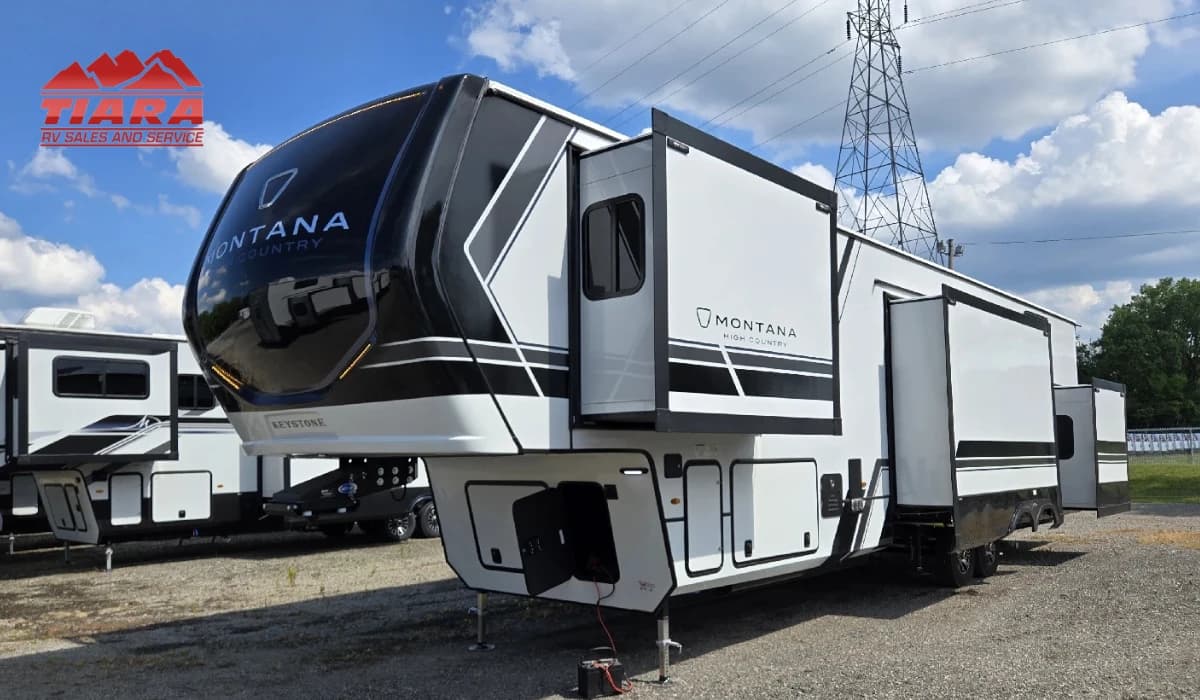
The Montana High Country is Keystone RV's premium full-time-capable fifth wheel, built with Azdel composite walls, Tuf-Ply roofing, and an enclosed heated underbelly designed to perform in all four seasons. For buyers considering full-time RV living, that specification list is meaningful, but knowing which features matter for daily life and which floorplans are actually designed for residential use rather than weekend camping is a different conversation than reading a spec sheet. This guide breaks down the construction details that translate to real full-timer advantages, which Montana High Country layouts earn their place in the full-time conversation, and what the upgrade experience actually looks like for someone moving out of a standard fifth wheel.
What Makes a Fifth Wheel Full-Timer Ready - and Where the Montana High Country Delivers
Not every feature on a premium fifth wheel spec sheet is relevant to full-time living. Some are comfort upgrades. Some are aesthetic. The ones that matter for full-timers fall into three categories: thermal and weather performance, structural durability under sustained use, and interior functionality for daily life. The Montana High Country addresses all three, but understanding how it does so helps buyers evaluate whether a specific floorplan and configuration actually fits their lifestyle.
Azdel Composite Walls: Why the Substrate Matters for Full-Timers
Traditional RV sidewall construction uses a wood-based substrate laminated between the exterior fiberglass skin and the interior wall panel. Wood absorbs moisture. Over time and sustained use, that moisture absorption leads to delamination, soft spots, and eventual structural degradation, the most common and expensive failure mode in older fifth wheels used heavily over multiple years.
The Montana High Country uses Azdel composite panels in place of wood substrate. Azdel is a fiberglass-reinforced thermoplastic that does not absorb moisture, does not rot, and does not support mold growth. For a full-timer who is living in the unit year-round across varying climates, including humid summers and wet shoulder seasons, that substrate choice is not a marketing detail. It is a structural decision that directly affects the long-term integrity of the unit.
The practical difference shows up over a three-to-five-year ownership window. A full-timer in a standard fifth wheel with wood substrate construction who experiences any seal failure or moisture intrusion event, a cracked roof seam, a failed slide wiper seal, a window that starts sweating, is dealing with a substrate that holds that moisture and accelerates deterioration. A full-timer in a Montana High Country with Azdel walls has a much higher tolerance for the occasional moisture event before structural damage begins.
Tuf-Ply Roofing and the Enclosed Heated Underbelly
The Montana High Country's Tuf-Ply roof membrane is a reinforced material designed to resist puncture, UV degradation, and the thermal cycling that standard EPDM membranes handle less reliably over time. For a full-timer who may be parked under trees, dealing with branch contact, or simply accumulating years of UV exposure, a more durable roof substrate extends the interval between reseal events and reduces the likelihood of membrane failure that leads to water intrusion.
The enclosed and heated underbelly is the feature that most directly separates the Montana High Country from standard fifth wheels for cold-climate full-timers. Most fifth wheels have exposed or partially enclosed tank and plumbing systems that are vulnerable to freezing when ambient temperatures drop below 20 degrees Fahrenheit. The Montana High Country's fully enclosed underbelly traps heat from the interior ducting system, keeping tanks and water lines functional in sustained cold that would freeze a standard unit's systems within hours.
For a full-timer who plans to stay in northern states through winter — or who simply does not want to be forced south by cold weather, this feature alone justifies a significant portion of the premium over a standard Montana configuration.
Floorplan Analysis: Residential Living Space vs. Camping-Optimized Layouts
The Montana High Country line includes floorplans that were designed with different use cases in mind, and not all of them are equally suited to full-time living. This is the detail that separates a thoughtful purchase from a regrettable one, and it requires looking past the total square footage to how that space actually functions across a normal day.
Full-timer-friendly Montana High Country layouts share several characteristics:
- A dedicated workspace or desk area that does not require converting a dining surface every time someone needs to work
- A master bedroom with genuine wardrobe storage, not just overhead bins and under-bed access
- A bathroom configuration that functions as a primary bathroom, not a campsite convenience — full shower with real clearance, a vanity with counter space, and adequate ventilation
- A kitchen layout where two people can be present simultaneously without collision
- Living room slide-out that creates a floor footprint large enough to move through comfortably rather than requiring everyone to step sideways
Camping-optimized layouts, by contrast, prioritize sleeping capacity, entertainment features, and outdoor connectivity over the daily-use functionality that full-timers depend on. A floorplan with four sleeping surfaces and a theater seating configuration looks appealing at a show but becomes impractical when it is your primary residence and you need to run a household from it every day.
The right approach when evaluating any Montana High Country floorplan for full-time use is to walk through a mentally simulated weekday: waking up, making coffee, working through a morning, cooking lunch, running errands, returning, making dinner, and winding down. If the traffic flow or functional space breaks down at any point in that sequence, it will break down every day.
Before and After: Upgrading from a Standard Fifth Wheel to the Montana High Country
The upgrade experience is worth describing concretely, because the differences are not always obvious during a dealership walk-through. Consider a full-timer who has been living in a mid-tier standard fifth wheel for two years before moving into a Montana High Country.
Before the upgrade, the common friction points tend to cluster around the same issues: wall panels that flex noticeably when the temperature drops significantly, a bathroom that feels adequate for occasional use but cramped as a daily primary bathroom, cabinetry hardware that has loosened from the vibration of regular towing, and a heating system that struggles to maintain consistent temperature throughout the unit during sustained cold.
After the upgrade to a Montana High Country, the differences that full-timers consistently report are not primarily about aesthetics. They are about the absence of those friction points. Walls that feel solid and do not flex. A bathroom that functions as a real bathroom. Hardware that holds. A thermal envelope that maintains temperature without the furnace cycling constantly. The luxury interior finishing is noticeable, but it is the structural and systems performance that changes the daily experience in ways that matter most over months and years of continuous living.
Browse our current selection of new fifth wheel inventory to compare available Montana High Country floorplans. If you have specific questions about which layouts are best suited to full-time living, our FAQ page covers the questions we hear most often from buyers considering this transition.
Frequently Asked Questions
Is the Keystone Montana High Country good for full-time living?
Yes, the Montana High Country is one of the more capable fifth wheels in its class for full-time use. The Azdel composite wall construction, Tuf-Ply roofing, enclosed and heated underbelly, dual-pane windows, and residential-grade interior systems are all directly relevant to the demands of continuous daily living. The key variable is floorplan selection, not every Montana High Country layout is designed with full-time residential functionality in mind, so floorplan evaluation should be specific to how you will actually use the space.
What does Azdel composite construction mean for an RV?
Azdel is a fiberglass-reinforced thermoplastic panel used in place of the wood-based substrate found in traditional RV sidewall construction. Unlike wood, Azdel does not absorb moisture, does not rot, and does not support mold growth. For full-timers who accumulate years of continuous use in varying climates, Azdel construction significantly reduces the risk of the wall delamination and structural degradation that commonly affects wood-substrate units over time.
Can the Montana High Country be used in cold weather year-round?
Yes, when properly equipped. The enclosed and heated underbelly system keeps tanks and plumbing lines protected in sustained cold by trapping heat from the interior ducting system. Combined with the deep insulation package and dual-pane windows standard across the line, the Montana High Country is one of the more capable fifth wheels for cold-climate full-timing. Buyers should verify that their specific model year and configuration includes the full enclosed underbelly as standard rather than as an optional package on lower trim levels.
Which Montana High Country floorplan is best for full-timers?
The best Montana High Country floorplan for full-time living prioritizes a dedicated workspace, residential bathroom functionality, real wardrobe storage in the bedroom, and a living area with enough floor space to move through comfortably. Floorplans with four sleeping surfaces or bunkhouse configurations are typically optimized for family camping use rather than full-time residential living. A walk-through that simulates a complete weekday routine is the most reliable way to evaluate whether a specific layout works for daily life rather than weekend use.
Talk to Our Team About the Montana High CountryExplore Financing Options