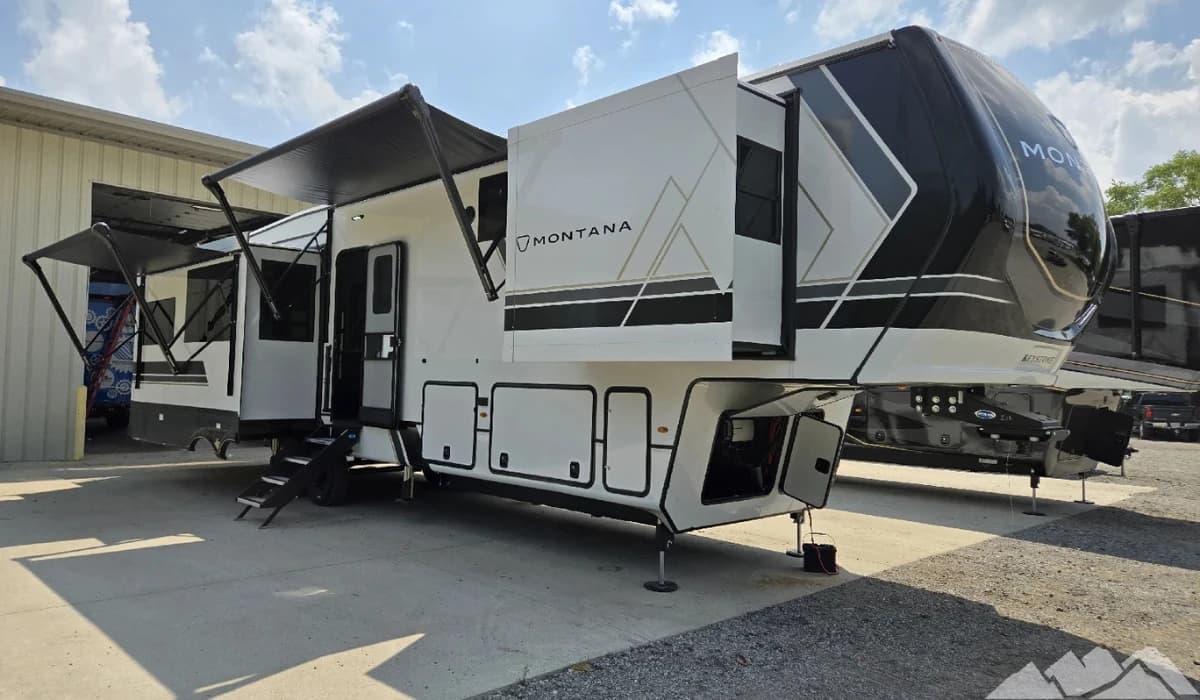
Luxury RV sales in Elkhart center on a segment of fifth wheels built to measurably different construction standards, Azdel composite walls, enclosed heated underbellies, full-body paint, and residential-grade systems, not simply units that use the word "luxury" in their marketing. The distinction matters because the term is applied broadly across the RV industry, and buyers shopping at the top of the market need a reliable way to separate genuine premium construction from mid-tier product dressed up in upgraded fabric choices and stainless appliances.
At Tiara RV, we work with buyers at every level of the market. The conversations around premium fifth wheels are consistently different from mid-tier purchases: different questions, different priorities, and a different decision-making process. What follows is an honest breakdown of what the premium fifth wheel segment actually looks like, who buys in it, and why Elkhart is where serious buyers at the top of the market come to shop.
What Separates Genuine Luxury Construction from Marketing Language
The word “luxury” gets applied to a wide range of RVs, from genuinely premium builds to mid-tier units with upgraded upholstery and a stainless appliance package. What actually separates a premium fifth wheel from a well-appointed mid-tier unit shows up in the build specifications, not the brochure. Those differences are real, measurable, and they compound over years of use.
Construction, Materials, and Systems: Where Premium Fifth Wheels Actually Differ
Wall construction is the most significant differentiator in the premium segment. Mid-tier RVs are predominantly built with wood framing and OSB (oriented strand board) sheathing, materials that perform adequately in dry conditions but are vulnerable to moisture intrusion over time. Premium fifth wheels in lines like the Keystone Montana High Country use Azdel composite panels, which are fiberglass-reinforced thermoplastic sheets that do not absorb water, do not rot, and do not provide a substrate for mold growth. The weight difference is also meaningful: Azdel panels are lighter than wood-framed walls of comparable thickness, which matters for payload and towing dynamics on a heavy unit.
Roofing standards follow a similar pattern. The Montana High Country uses Tuf-Ply roofing, a one-piece laminated membrane engineered for resistance to UV degradation and puncture. Entry and mid-tier units typically use TPO or rubber membrane roofing that requires more frequent inspection and resealing to maintain integrity. Over a five-to-ten year ownership period, the difference in roof maintenance requirements is significant — and a compromised roof seal is the most common origin point for the water damage that shortens the usable life of lesser-built units.
The underbelly is where four-season capability is either real or not. A genuine premium fifth wheel carries an enclosed, heated underbelly — meaning the tank bay and plumbing runs are sealed within an insulated, temperature-managed cavity that protects against freeze damage in cold-weather conditions. Mid-tier units often advertise "four-season packages" that amount to added insulation without a fully enclosed and heated underbelly. For buyers who camp through fall and into early winter in northern Indiana, or who travel seasonally into colder climates, this distinction has direct consequences for how the unit performs and whether plumbing survives a cold night.
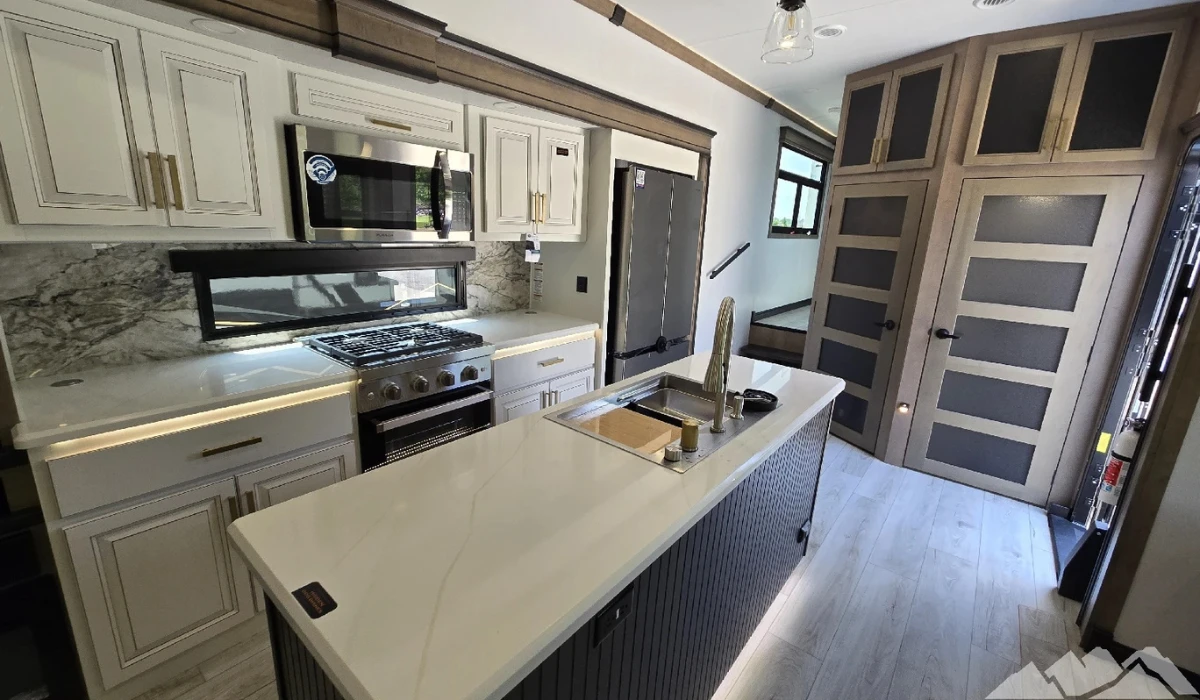
Residential-grade systems round out the picture. Premium fifth wheels carry appliances, slide mechanisms, HVAC capacity, and electrical infrastructure that match or exceed what buyers find in their sticks-and-bricks homes. The gap between a genuine residential refrigerator and a larger RV-grade unit, or between a true residential range and a scaled-down RV burner, is apparent the first time you use them and more apparent over years of regular cooking in a full-time or frequent-camping scenario.
The Buyer Profile for Premium Fifth Wheels: Who Actually Shops This Segment
Premium fifth wheel buyers are not first-time RV purchasers. The typical buyer in this segment arrives with direct experience: they have owned one or more prior units, they know what they wished their last unit did better, and they are making a deliberate decision to invest at a level that eliminates the compromises they've already lived with.
Full-timers represent a significant share of the premium fifth wheel market. For a buyer living in their unit full-time, whether retired and traveling, working remotely, or in transition, the difference between a well-built unit and a premium one shows up daily. Construction durability, systems reliability, thermal performance, and the residential feel of the living space all matter more when the unit is a primary residence than when it's a weekend destination. Full-timers are also more attuned to long-term cost of ownership: a unit that requires fewer repairs, holds its resale value better, and performs well in varied climates is worth more to someone using it 365 days a year than the purchase price gap might suggest.
Retirees are the other dominant buyer profile at this end of the market. They often have a clear picture of what they want, a tow vehicle already sized for a premium fifth wheel, and the camping experience to know which floorplan features actually matter versus which ones photograph well. This buyer tends to spend more time walking and measuring floorplans, asking specific questions about underbelly configuration and slide mechanisms, and comparing construction specifications across lines. Price is a consideration, but it is rarely the primary filter.
The third profile is the buyer on their second or third unit, upgrading deliberately after identifying the specific gaps in what they owned before. This buyer is often the most direct: they know what failed, what they outgrew, and what they wish they had started with. For many in this group, the decision to step into the premium segment is driven by the recognition that the cost of buying up would have been lower than the combined cost of the upgrade path they actually took.
The Elkhart Advantage: Why Premium Buyers Travel Here to Buy
Elkhart County produces roughly 80 percent of North American RV output. That concentration creates advantages for buyers at the top of the market that aren't available at dealerships outside the production corridor, and those advantages are most significant in the premium fifth wheel segment, where the difference between a well-informed purchase and a misinformed one is measured in tens of thousands of dollars.
Factory proximity means parts availability, service access, and manufacturer relationships that translate directly into faster warranty resolution and better technician familiarity with the specific units on the lot. A Montana High Country purchased from an Elkhart-area dealer is serviced by technicians who work on that unit regularly, have direct access to Keystone's technical support and parts pipeline, and understand the construction details that matter when something needs attention. That service relationship has real value over a five-to-ten-year ownership period.
Selection is the other structural advantage. Buyers shopping premium fifth wheels in Elkhart have access to inventory depth that regional markets can't replicate. Walking multiple floorplans of the same line, rather than choosing from two or three units on a distant lot, is the only reliable way to find the configuration that actually matches how you live in the space. The mental simulation of running a full day through a floorplan is something you can only do standing in the unit, and Elkhart gives premium buyers the inventory to do that comparison properly.
Browse our Keystone fifth wheel inventory in Elkhart to see current Montana and Montana High Country availability, and explore financing options built for premium unit purchases. Our team works through the full transaction picture, construction specifications, floorplan selection, and financing structure, with every buyer at this level of the market.
Frequently Asked Questions
What makes a fifth wheel a luxury RV?
Genuine luxury in the fifth wheel segment is defined by verifiable construction standards: Azdel or composite wall panels, enclosed and heated underbellies, premium roofing membranes, residential-grade appliances, and multi-slide configurations with heavy-duty mechanisms. Units that use "luxury" in marketing without those specifications are typically mid-tier products with upgraded interior finishes.
Is the Keystone Montana High Country considered a luxury fifth wheel?
Yes. The Montana High Country is Keystone's premium flagship line and carries the construction specifications that define the luxury segment: Azdel composite walls, Tuf-Ply roofing, enclosed heated underbelly, and residential-grade systems throughout. It is one of the most consistently specified premium fifth wheels in the market and a frequent choice among full-timers and serious seasonal campers.
Why do buyers travel to Elkhart for luxury RV purchases?
Elkhart's manufacturing concentration gives buyers factory-direct pricing advantages, deeper inventory selection across premium lines, and access to dealerships with factory-certified service departments and direct manufacturer relationships. For a purchase at the top of the market, those factors have meaningful long-term value beyond the initial transaction.
What is the difference between Montana and Montana High Country?
Both are premium fifth wheel lines from Keystone. The Montana High Country carries additional standard construction features, including Azdel composite walls, Tuf-Ply roofing, and a fully enclosed heated underbelly as standard, features that are either optional or absent on the base Montana line. High Country is the stronger choice for full-timers, cold-weather campers, and buyers who prioritize long-term construction durability.