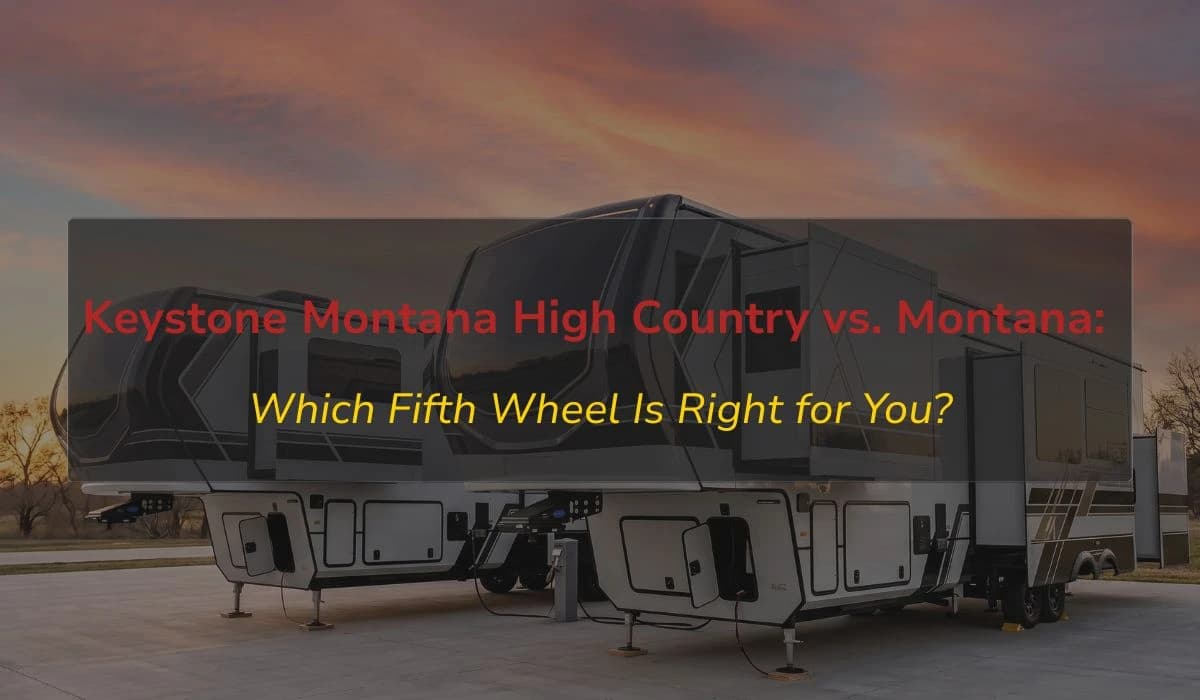
If you have been researching Keystone fifth wheels, you have almost certainly landed on both the Montana and the Keystone Montana High Country and wondered what actually separates them. On the surface, the two lines look similar. Both are built by the same manufacturer in the same Midwest production corridor, and both carry the Montana name that has become one of the most recognized brands in the fifth wheel segment. But the differences between them are meaningful, and choosing the wrong line for your actual use case is an expensive mistake to reverse. This guide breaks down the construction differences, the buyer profiles each line is built for, and how to think about total cost of ownership across both.
Two Lines, Two Buyer Profiles: Understanding What Keystone Is Actually Selling
Keystone did not create the Montana High Country to replace the Montana. They created it to serve a different buyer. Understanding that distinction is the starting point for making the right decision, because both lines are well-built for their intended purpose. The error most buyers make is treating them as interchangeable and choosing based on price alone.
The Keystone Montana: Built for the Serious Weekend and Seasonal Camper
The standard Montana line has been one of Keystone's flagship products for over two decades, and it has earned that position by consistently delivering a feature-rich, well-constructed fifth wheel at a price point that a wide range of buyers can access. The Montana is designed for owners who camp frequently — weekends, extended summer trips, seasonal stays — but who are not necessarily living in the unit year-round.
Standard Montana features that define the line include residential-style cabinetry, solid surface countertops in most configurations, multiple slide-outs, and a construction standard that is meaningfully above what you will find in entry-level fifth wheel brands. The Montana's frame and sidewall construction have historically been a strong point in the line.
Where the standard Montana makes tradeoffs is in the area of four-season capability and premium interior finishing. The insulation packages, tank protection systems, and luxury appointments that define the High Country are either optional or absent in the base Montana configuration. For a buyer whose camping season runs April through October and who stores the unit during winter, those tradeoffs are entirely reasonable.
You can review the full Montana lineup and available floorplans on Keystone's Montana brand page.
The Keystone Montana High Country: Built for Full-Timers and Luxury Buyers
The Montana High Country is positioned as Keystone's premium fifth wheel offering, and the differences from the standard Montana are not cosmetic. They are structural and functional, and they show up in long-term ownership cost in ways that matter to the buyers this line is designed for.
The High Country's construction upgrades center on three areas: thermal performance, interior quality, and system durability. The enclosed and heated underbelly protects tanks and plumbing in sustained cold, making the unit viable for full-time living in northern climates including Indiana winters. The insulation depth in the floors, walls, and roof is higher than the standard Montana, and dual-pane windows are standard rather than optional.
Interior finishing in the High Country reflects a luxury positioning that goes beyond standard Montana appointments. Hardwood cabinet doors, residential-grade hardware, larger bathroom configurations, and premium upholstery packages are standard across the line rather than upgrade items. For a buyer who is going to spend the majority of their time inside this unit, those finishing details add up to a meaningfully different daily experience.
Keystone's Montana High Country brand page details the current model year specifications and available floorplans for buyers who want to compare configurations directly.
Side-by-Side: Construction Quality and Standard Features Compared
| Category | Keystone Montana | Montana High Country |
|---|---|---|
| Target Buyer | Frequent weekender and seasonal camper | Full-timer or luxury-focused buyer |
| Four-Season Capability | Standard insulation; limited cold-weather use | Enclosed heated underbelly; deep insulation standard |
| Windows | Single-pane standard on most configurations | Dual-pane standard throughout |
| Cabinetry | Residential-style; solid construction | Hardwood doors; premium hardware standard |
| Interior Finishing | Above average for the segment | Luxury appointments standard across the line |
| Bathroom Configuration | Functional; varies by floorplan | Larger standard footprints; residential fixtures |
| Best Use Case | 3-season camping, storage in winter | Year-round use, full-time living, extended travel |
Total Cost of Ownership: Where the Value Calculation Gets Interesting
The Montana High Country carries a higher purchase price than the standard Montana, and that gap is real. But evaluating cost on purchase price alone misses the more complete picture that experienced buyers consider.
The first factor is depreciation. Premium-brand fifth wheels in the Montana High Country tier depreciate more slowly than entry-level or mid-tier units, and they hold resale value more effectively than comparable units from lesser-known manufacturers. A three-year-old High Country in good condition commands a meaningfully stronger used market position than a three-year-old entry-level fifth wheel of the same age. RV Trader's market research data reflects consistent demand for the Montana and Montana High Country lines in the used market.
The second factor is the cost of upgrading features post-purchase. A buyer who starts with a standard Montana and then adds aftermarket insulation, upgraded windows, and a generator install to support full-time use will spend more than a buyer who started with a High Country that included those systems from the factory. Factory-integrated systems are more reliable and better warranted than aftermarket additions.
The third factor is use intensity. A buyer who camps twenty weekends per year and stores the unit through winter will not extract the full value of the High Country's four-season capability or luxury finishing. For that buyer, the standard Montana delivers excellent value. A full-timer or frequent long-term traveler who puts the unit to daily use over twelve months will recoup the High Country's premium through comfort, durability, and reduced maintenance events.
Browse our current selection of new fifth wheel inventory to compare available Montana and Montana High Country floorplans side by side. If you are ready to discuss financing options for either line, our RV financing page outlines how we work with multiple lenders to find competitive rates across a range of purchase prices.
Frequently Asked Questions
What is the difference between the Keystone Montana and the Montana High Country?
The Montana High Country is Keystone's premium fifth wheel line, positioned above the standard Montana with upgrades in four-season insulation, enclosed and heated underbelly systems, dual-pane windows, hardwood cabinetry, and luxury interior finishing. The standard Montana is a well-built, feature-rich unit designed for frequent seasonal campers who do not require year-round capability or premium finishing at the High Country level.
Is the Montana High Country worth the extra cost?
For full-timers, winter campers, and buyers who prioritize long-term ownership and resale value, yes. The High Country's factory-integrated four-season systems, premium construction, and stronger used market position make the higher purchase price justifiable over a five-to-ten-year ownership window. For seasonal campers who store the unit through winter, the standard Montana delivers comparable value at a lower entry point.
Can you live full-time in a Keystone Montana High Country?
Yes. The Montana High Country is one of the more capable fifth wheels in the market for full-time living, particularly in varied climates. The enclosed heated underbelly, deep insulation, dual-pane windows, and residential-grade interior systems are all specifically relevant to daily living demands that exceed what occasional camping requires. Full-timers should verify that the specific floorplan they are considering includes all four-season features as standard rather than optional on the chosen model year.
How does the Montana High Country hold its resale value?
The Montana High Country holds resale value more effectively than most fifth wheels in its price range, driven by consistent buyer demand for the Montana name, the quality of the build, and the premium features that remain relevant to used buyers. Units that have been well maintained with documented service history command the strongest resale positions in the used market.