First-time RV owners tend to focus on the unit itself, and rightfully so. But the conversation that often gets skipped until the first trip goes sideways is the one about what you need to bring with you. A travel trailer or fifth wheel does not come with everything required for safe, comfortable camping. Knowing which RV parts in Elkhart and accessories belong in your kit before you leave the driveway is the difference between a weekend you want to repeat and one you spend troubleshooting on the side of the road. This guide breaks it down into what you absolutely cannot skip and what is worth adding once you have a few trips under your belt.
Building Your RV Kit the Right Way: Essentials First, Upgrades Second
The instinct for new owners is to buy everything at once. The smarter approach is to prioritize the items that protect your unit and your safety, then layer in comfort upgrades based on how you actually camp. Buying in that order also keeps the initial investment manageable and ensures you are not skipping a surge protector to pay for a mattress topper.
The Must-Haves: Protecting Your Rig from the First Hookup
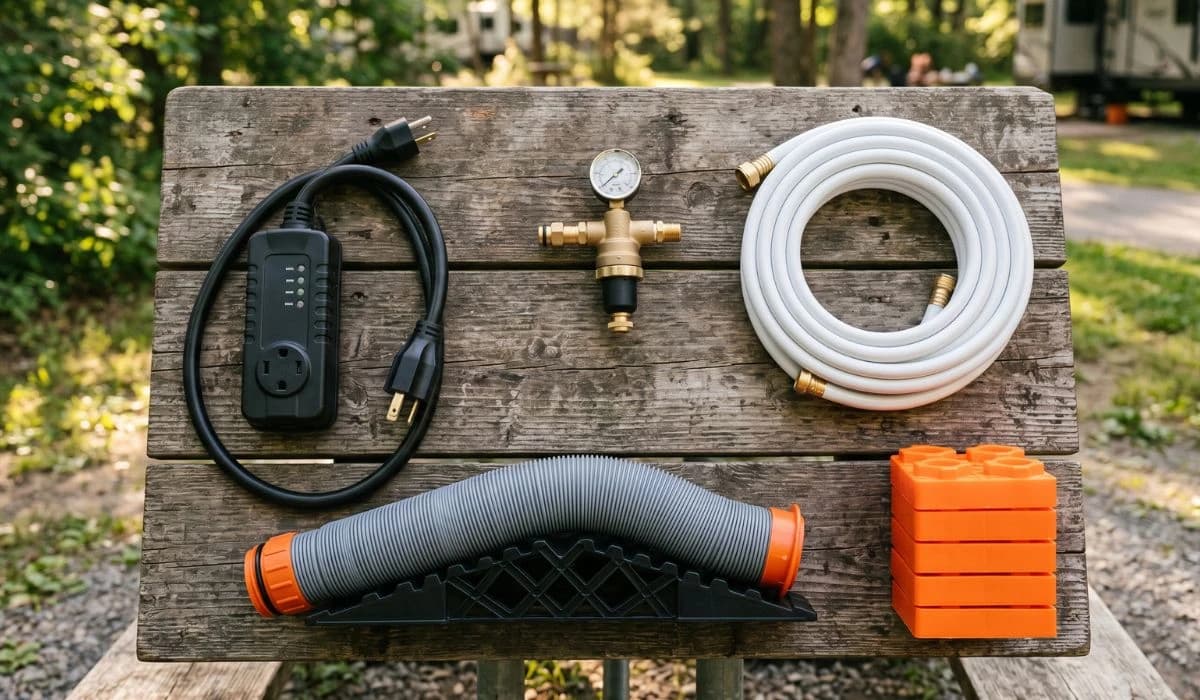
Surge protector. This is non-negotiable. Campground pedestals vary widely in power quality, and a voltage spike or wiring fault at a poorly maintained pedestal can damage or destroy your RV's converter, air conditioner, refrigerator, and any other hardwired electronics. A quality surge protector with an automatic disconnect will cut power before damage occurs. Look for a unit that monitors both voltage and amperage and displays real-time readings. It should match your rig's service, either 30-amp or 50-amp, which is printed on the power cord or in the owner's manual.
Water pressure regulator. City water hookups at campgrounds can deliver pressure well above what RV plumbing is designed to handle. Most RV water systems are rated for 40 to 60 PSI. Municipal supplies can push 80 to 100 PSI or higher. Without a regulator inline, that excess pressure stresses fittings, hose connections, and the water inlet valve itself. A simple brass regulator threads onto the pedestal before your hose connects and keeps pressure in a safe range. Some regulators include a built-in gauge so you can confirm the output.
Sewer hose and support system. Every RV comes with some version of a sewer connection setup, but not always a hose support. A sewer hose support, the accordion-style plastic ramp that elevates the hose at an angle toward the campground drain, is essential for proper drainage and for keeping the hose off the ground, where it picks up debris and is more likely to fail. Without an adequate slope, waste does not drain completely, which creates odor problems and can leave solids in the tank.
Leveling blocks or an automatic leveling system check. If your unit does not have automatic leveling, quality stackable leveling blocks are a must. An unlevel RV is more than uncomfortable. It puts stress on slide mechanisms, affects refrigerator function in units with absorption refrigerators, and makes every surface in the kitchen harder to use. Confirm your unit's leveling system before your first trip and have a manual backup plan.
Drinking water hose. A white or blue NSF-rated drinking water hose is separate from a standard garden hose for a reason. Standard garden hoses can leach chemicals and harbor bacterial growth. The NSF 61 rating on a drinking water hose confirms it is safe for potable water contact. Use a dedicated hose for your fresh water connection and store it separately from any utility hoses.
The Nice-to-Haves: Comfort and Convenience Upgrades Worth Adding
Upgraded mattress. RV mattresses are almost universally undersized and underbuilt. Most travel trailers and fifth wheels ship with mattresses that sacrifice comfort for weight savings. A replacement mattress cut to RV-specific dimensions, either a short queen or RV queen, depending on your floorplan, can dramatically change how rested you feel after a night on the road. Memory foam or hybrid options in RV-specific sizes are widely available. This is a quality-of-life upgrade with a meaningful return if you camp more than a few nights a year.
Backup camera system. Backing a travel trailer or fifth wheel into a campsite without a camera requires experience and ideally a spotter. A wireless or hardwired backup camera mounted to the rear of the unit gives you a clear view of what is behind you and dramatically reduces the stress of maneuvering in tight campgrounds. Some systems integrate with a monitor in the cab. Others connect via app to a smartphone. Either way, this is an upgrade that pays for itself the first time it saves you from backing into a post or another unit.
RV-specific toilet chemicals and tank treatments. This sounds basic, but using the wrong products in your black tank is a common first-timer mistake. Standard household cleaners and some holding tank additives can damage tank sensors and seals. Use products formulated for RV holding tanks and make sure any toilet paper you use is RV-rated or septic-safe to prevent clogs.
Wheel chocks. Simple and inexpensive, but frequently overlooked. Wheel chocks prevent your rig from rolling once it is parked, which matters on any site with even slight slope. X-shaped chocks that fit between dual tires are particularly effective on tandem axle trailers.
Why Sourcing Parts from an Elkhart Dealer Matters for Keystone Owners
Elkhart, Indiana is the manufacturing hub of the North American RV industry. Keystone RV, one of the country's largest and most recognized travel trailer and fifth wheel manufacturers, is headquartered here. That proximity has a direct benefit for owners buying RV parts in Elkhart.
Compatibility is the core issue. Keystone units use specific connector types, hose fittings, slide components, and electrical configurations that do not always match generic aftermarket parts available at big box stores. When you source parts through an authorized Keystone RV dealer, you are getting components selected or verified for your unit's specific requirements, not a generic fit that may require modification or fail early.
There is also the knowledge factor. A parts counter staffed by people who work on Keystone units daily will catch mismatches before they become problems. That is a different experience than ordering online and hoping the spec sheet was accurate.
Visit our RV parts department at Tiara RV for in-stock accessories, Keystone-compatible components, and guidance on what your specific unit needs. If you are shopping for a new Keystone travel trailer to go along with your kit, browse our new Keystone travel trailer inventory. You can also explore all new travel trailers and fifth wheels currently in stock.
Frequently Asked Questions
What RV accessories do I need for my first camping trip?
At minimum, you need a surge protector matched to your rig's amperage, a water pressure regulator, a drinking-water-safe hose, a sewer hose with a support system, and leveling blocks or a functioning automatic leveling setup. These items protect your unit and ensure basic systems operate correctly from day one.
Do I need a special water hose for my RV?
Yes. Use only a white or blue hose rated for drinking water and marked NSF 61. Standard garden hoses are not safe for potable water use and can affect the taste and safety of your fresh water supply. Store it separately from utility hoses to avoid cross-contamination.
Are RV parts from Elkhart dealers better than buying online?
For Keystone and other Indiana-built units, buying through an authorized Elkhart dealer offers a compatibility advantage. Dealer parts staff can match components to your specific unit's configuration, which reduces the risk of buying a part that does not fit or is not rated for your system. Online sourcing is convenient but requires you to verify compatibility yourself, and returns on the wrong part cost time and money.
Is a backup camera worth adding to a travel trailer?
For most owners, yes. Backing a trailer without a camera requires significant practice, a reliable spotter, and ideal sight lines. A rear camera reduces stress, improves accuracy on tight sites, and reduces the likelihood of contact with obstacles that are not visible in mirrors. It is particularly valuable for solo campers who do not always have a second person available to guide them in.